Q&A with Dr. Chris Caldwell, President of the College of Menominee Nation
| The College of Menominee Nation, a land grant institution of higher education chartered by the Menominee Nation, provides unique learning experiences for students looking to earn technical diplomas, associate, and bachelor degrees. The college has its main campus in Keshena and a smaller campus in Green Bay. It is one of two tribal-run colleges in Wisconsin and one of 35 in the nation.
Dr. Christopher Caldwell, president of CMN, brings a rich and diverse educational background to his role. His academic journey began at CMN, continued at the University of Wisconsin–Green Bay, and culminated with a doctorate from the Nelson Institute at UW–Madison. A passionate advocate for lifelong learning, Dr. Caldwell’s 25-year educational path reflects his unwavering commitment to personal growth and academic excellence. |
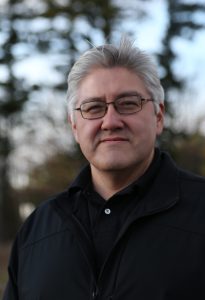 Dr. Chris Caldwell, President of the College of Menominee Nation |
Question: How did your education prepare you for your job of running the College of the Menominee Nation?
Caldwell: My goal was to be a forester, working with trees, wildlife surveys, habitat restoration and more. But as I started going to school, a lot of other opportunities opened up that I hadn’t expected, and I met with a lot of different people. As I went through my education, it was still forestry-focused, but it elevated into planning and policy work. That led me to the College of Menominee Nation to lead our Sustainable Development Institute. From that, I saw how I could build opportunities and support others.
Question: Why are you a supporter of lifelong learning?
Caldwell: Earning a diploma is important and opens many doors, but the real value often lies in the exchange of ideas with classmates and instructors. Engaging in these conversations helps you explore concepts and perspectives you may not have encountered before. What you learn doesn’t just benefit you — it’s something you can bring back to your family and community. That’s why it’s so important to never stop learning: when you grow, those around you grow as well.
Question: What’s the value in attending college today?
Caldwell: Everyone points to the degree and how that can help you earn more money, which is true, but I also look at the soft skills and life skills that students learn. One big skill is that college can help students find their voice. Sometimes, we may think we have certain values or a position on certain topics and if we’re not challenged to think about or even debate, they don’t get tested or refined. I think a big part of college is giving students that opportunity to meet other people who have different views and perspectives, that may not be the same as ours. It really pushes us to develop our skills in how we both communicate what our position is and also how we listen.
When I was in the classroom and being pushed out of my comfort zone, I was learning to be a leader — to take responsibility for not only my actions, but how my actions impacted others.
Question: Cost can be a factor for some people forgoing college. What does CMN do to keep costs affordable?
Caldwell: While some question whether college is worth the cost, we’ve made it a priority to keep education affordable. Our founding president looked for alternatives to student loans to avoid burdening students with debt. Instead, we focus on providing student worker positions, scholarships, and emergency aid—because we know even a flat tire can derail someone’s education.
We keep fees low and raise funds through donors, since we receive limited support from the Tribe and state. Though managing finances can be challenging, it’s worth it. Many of our students work while attending school, and we design our class schedules to support them. As a former working student myself, I understand the balance they’re striving for.
Question: Collaboration is a key value in the New North. How does the College of Menominee Nation work with businesses and other schools?
Caldwell: We’ve built strong regional connections, including partnerships through New North and with local county employers. Our students gain hands-on experience through internships at area businesses, tribal enterprises like forestry and the sawmill, and within tribal government. We also host annual career fairs, bringing in local employers to connect directly with our students across both trades and academic programs.
We meet with area employers to learn about workplace needs they have and that’s when we hear about soft skill development and some of the other intangibles that are important in having a good employee.
We are also part of NEW ERA, a coalition of colleges and universities in the New North. It helps us understand the trends that higher education is seeing in the workforce and economic development, and trends that are impacting higher education.
A couple of partnership agreements with other institutions allow credits to transfer, supporting students who begin their education here and choose to continue at another school.
Question: What role does the college play in the broader community?
Caldwell: Much of our work at the Sustainable Development Institute focuses on climate change and its impact on the Menominee forest, including the spread of invasive species. We’ve already observed certain tree and plant species migrating north as temperatures rise. But our research goes beyond science. We’ve conducted socio-ecological studies, such as interviewing tribal members about cultural activities within the forest. We examine the plant and animal species central to those traditions and how climate change might alter them. If those relationships with the forest are disrupted, how will the Menominee people adapt?
We’ve engaged with different tribal and rural institutions to explore people’s connections to the environment. How do we take care of our environment and how does our environment take care of us? There’s a connection there.
You know, we’re all a part of something that’s bigger than ourselves, and higher education institutions are great places for advancing our understanding, in research, in education and community engagement.